
When Back Pain May Point to a Disc Problem
Persistent low-back pain is not always “just” a sore back. When pain travels into a leg, or you notice numbness, tingling, or symptoms that worsen after sitting, it may be time to have the problem evaluated. A bulging or herniated disc is one possible explanation, but these symptoms can have several causes, so an individualized examination is essential.
At Disc Center of America in Galveston, we help patients understand their symptoms and explore personalized, non-surgical options when appropriate. The goal is not to diagnose yourself online or promise a particular result. It is to recognize when ongoing pain deserves professional attention and learn what may be involved in a thoughtful care plan.
How Spinal Discs Can Contribute to Back and Leg Symptoms
Spinal discs are the cushion-like structures between the bones of the spine. They help absorb everyday forces from movement, lifting, bending, sitting, and walking. Over time, an injury, repetitive strain, age-related changes, or a sudden movement can affect a disc.
A disc may bulge outward, or disc material may herniate through an outer layer. In some situations, this can irritate or place pressure near a spinal nerve. That is one reason a problem that begins in the low back can sometimes be felt farther down the body.
Still, disc findings are only one part of the picture. Muscle strain, joint irritation, spinal narrowing, hip conditions, and other nerve-related concerns can produce overlapping symptoms. A Galveston back pain doctor should consider your health history, daily activities, movement patterns, and examination findings before recommending care.
Symptoms That May Warrant a Disc Evaluation
Back pain can range from a short-lived ache to a problem that interferes with work, travel, sleep, or time with family. Consider scheduling an evaluation if you have persistent lower-back discomfort that does not seem to improve, especially when it occurs with one or more of the following symptoms:
- Pain that radiates from the low back into the buttock, thigh, calf, or foot
- Tingling, pins-and-needles sensations, or numbness in a leg or foot
- Symptoms that become more noticeable with prolonged sitting, bending, coughing, or certain movements
- Leg discomfort commonly associated with sciatica-like nerve irritation
- Reduced comfort when walking, standing, driving, or getting up from a chair
- Recurring episodes of back pain after a lifting incident, auto accident, workplace injury, or other strain
These symptoms do not automatically mean you have a bulging or herniated disc. However, they are useful details to share during an appointment. A careful exam can help determine whether disc-related irritation may be a reasonable consideration and whether additional medical evaluation or imaging may be appropriate.
Why Sitting Can Make Symptoms Feel Worse
Many people notice that their discomfort builds during a long drive, a workday at a desk, or an evening on the couch. Sitting changes the position and load of the low back, particularly when posture becomes slouched or movement is limited for long periods.
If a disc or nearby nerve is already irritated, remaining in one position may aggravate symptoms. That does not mean sitting is the cause of every back problem, nor does it confirm a disc injury. It does mean the pattern is worth discussing with a Galveston chiropractor who can assess how your symptoms respond to posture, movement, and daily demands.
Simple habits may help you manage comfort while you wait for an evaluation: change positions regularly, take brief walking breaks, use supportive seating, and avoid forcing painful stretches or movements. Your recommendations should be based on your specific condition rather than a one-size-fits-all internet routine.
Spinal Decompression as a Possible Non-Surgical Option
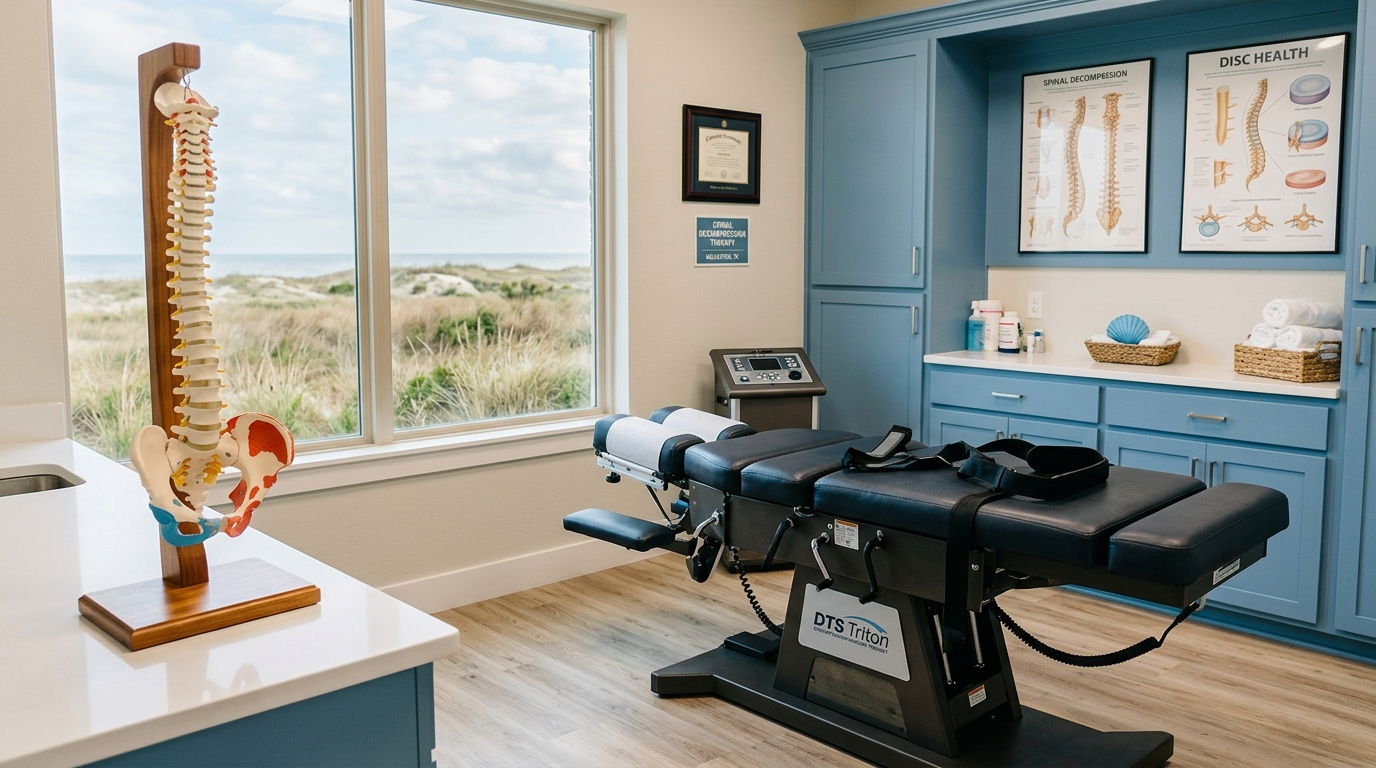
For some appropriate patients, spinal decompression therapy may be part of a non-surgical back pain treatment plan in Galveston. This treatment uses controlled, gentle traction intended to reduce pressure through targeted areas of the spine. Depending on the person and the clinical findings, it may be considered for certain disc-related concerns and persistent back or leg symptoms.
Spinal decompression is not right for everyone, and it is not a substitute for urgent medical care or a complete evaluation. At Disc Center of America, we review each patient’s symptoms, history, examination findings, and any relevant medical information before determining whether decompression may be appropriate.
When indicated, decompression may be combined with other elements of care designed around the patient’s needs. A broader personalized plan can include chiropractic care, movement and posture guidance, and recommendations intended to support spinal health. This individualized approach is important because no two cases of back pain, nerve irritation, or suspected disc injury look exactly alike.
What to Expect From a Personalized Back Pain Assessment
If you are looking for herniated disc treatment in Galveston, Texas, the first step should be understanding the source and pattern of your symptoms. During an evaluation, our team may discuss when your pain began, what makes it better or worse, whether symptoms travel into an arm or leg, prior injuries, work demands, and your health history.
We also assess movement, posture, areas of tenderness, and other relevant findings. This information helps us decide whether chiropractic care, spinal decompression, referral, imaging, or another next step may be appropriate. Disc Center of America emphasizes clear communication, so you can understand why a recommendation is being made and what role it may play in your care plan.
People seeking chronic back pain relief in Galveston often want a path that does not begin and end with masking symptoms. While no provider can guarantee outcomes, a thorough assessment can help identify sensible options for addressing the factors that may be contributing to ongoing discomfort.
When Back Pain Requires Urgent Medical Attention
Most episodes of back pain are not emergencies, but certain symptoms need urgent medical evaluation. Seek immediate medical care for new bowel or bladder problems, numbness in the saddle area around the groin or inner thighs, major or worsening weakness, fever with back pain, or back pain following severe trauma.
These signs can point to a more serious condition that requires prompt assessment. Do not wait for a routine chiropractic appointment if these symptoms are present. If you are unsure whether your symptoms are urgent, it is safest to contact an appropriate medical professional or seek emergency care.
Supporting Your Spine Between Visits
While an exam is the best way to receive guidance tailored to you, daily choices can affect how your back feels. Aim for regular, comfortable movement instead of long stretches of inactivity. Use careful body mechanics when lifting, keep frequently used items within easy reach, and avoid repeatedly pushing through pain that is becoming sharper, spreading, or accompanied by numbness.
If you have been in an accident or experienced a workplace injury, pay attention to symptoms that appear later as well as those you feel immediately. Early evaluation can provide a baseline, help clarify what is going on, and guide next steps based on your individual situation.
FAQ
How do I know whether my back pain is caused by a bulging or herniated disc?
Symptoms alone cannot confirm the cause. Persistent low-back pain with leg pain, numbness, tingling, or symptoms aggravated by sitting can be reasons to seek an evaluation, but several conditions can create similar patterns. A clinical examination is needed to determine appropriate next steps.
Can spinal decompression help a herniated disc?
Spinal decompression may be an option for some patients with certain disc-related symptoms, depending on their history and examination findings. It is not appropriate for every person or every type of back condition. Disc Center of America can determine whether it may fit within your individualized care plan.
Is pain running down the leg always sciatica?
No. Pain that travels into a leg can be associated with sciatic nerve irritation, but it can also arise from other structures or conditions. An evaluation can help distinguish the pattern and identify whether further medical assessment is needed.
Should I see a chiropractor after a workplace injury or auto accident?
It is wise to obtain an appropriate evaluation after an injury, particularly if pain persists, worsens, or includes numbness, tingling, weakness, or pain that radiates. The right next step depends on the nature of the injury, your symptoms, and any urgent concerns.
When should I seek emergency care instead of scheduling an appointment?
Seek urgent medical care for new bowel or bladder difficulties, saddle numbness, major weakness, fever with back pain, or pain after severe trauma. These symptoms should not wait for a routine office visit.
If lower-back pain, leg symptoms, tingling, or numbness have been limiting your life, Disc Center of America invites you to schedule a consultation at our Galveston spinal health clinic. We will listen to your concerns, perform an individualized assessment, and discuss whether a personalized, non-invasive spine treatment plan may be appropriate for you.