
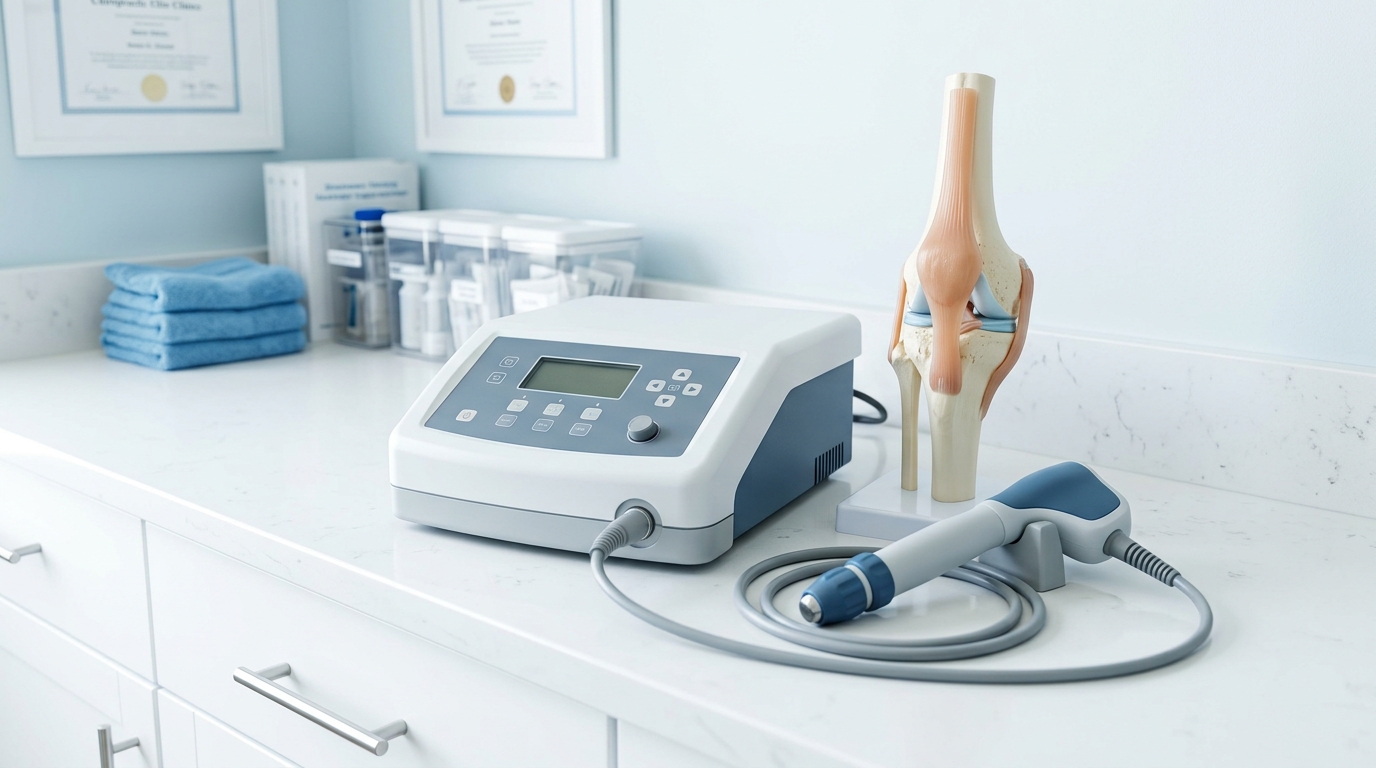
What Is SoftWave or Shockwave Therapy for Musculoskeletal Pain?
SoftWave, sometimes called shockwave therapy, is a non-invasive option that may be included in a musculoskeletal care plan for certain persistent tendon and soft-tissue concerns. It uses acoustic pressure waves directed at a specific area, but it is not a one-size-fits-all solution. The right approach depends on the condition, the history of the problem, the examination findings, and each person’s goals.
For active Galveston residents and second-home owners, lingering pain can make it harder to enjoy walking the Seawall, playing golf, boating, working out, or simply keeping up with daily routines. At Disc Center of America, we take the time to determine whether SoftWave may be a reasonable non-surgical option within a personalized plan of care.
What Is SoftWave Therapy?
SoftWave is a type of shockwave approach that delivers acoustic pressure waves to targeted tissues from outside the body. Despite the name, it does not involve surgery, injections, or electrical stimulation. A clinician applies a handheld device to the area being evaluated, using gel to help transmit the acoustic waves through the skin.
In plain language, the goal is to apply controlled mechanical energy to a focused area as part of a broader conservative care strategy. Treatment recommendations should be based on a careful assessment rather than a promise that one modality will solve every type of pain.
SoftWave is often discussed in the context of musculoskeletal care because some chronic tissue problems can be stubborn. Still, the available evidence, expected response, and appropriateness of shockwave-based care vary by diagnosis, body region, severity, and individual health factors. A responsible treatment plan starts with identifying what may actually be contributing to symptoms.
When Shockwave Approaches May Be Considered
Shockwave approaches may be considered for selected chronic tendon or soft-tissue problems, particularly when symptoms have persisted despite reasonable self-care or other conservative measures. Examples can include certain tendon-related concerns and localized soft-tissue irritation. The specific diagnosis matters greatly.
Not every ache, injury, or pain pattern is a good match. Back pain, neck pain, leg symptoms, disc concerns, nerve-related symptoms, and joint pain can have many possible causes. Someone looking for lower back pain relief in Galveston may need a different evaluation and care plan than someone with a focused, long-standing tendon complaint.
At Disc Center of America, we do not present SoftWave as a universal answer for chronic pain. Instead, we consider whether its use makes sense alongside chiropractic care, activity guidance, rehabilitation recommendations, or other conservative options appropriate to the patient’s needs.
Why a Careful Evaluation Comes First
A productive visit begins with a conversation. We want to understand where symptoms are located, how long they have been present, what movements or activities affect them, what has already been tried, and whether there was a specific event such as a sports injury, workplace injury, or auto accident.
The evaluation may include a physical examination of movement, tenderness, function, and the surrounding areas that could be influencing the problem. Depending on the concern, we may also discuss prior imaging, medical history, medications, past treatment, and any symptoms that call for referral or additional medical evaluation.
This matters because symptoms are not always a diagnosis. For example, a person seeking a Galveston chiropractor for a pinched-nerve sensation or radiating leg pain may require a different approach than someone dealing with a localized soft-tissue concern. If disc-related pain, sciatica, or another spine issue appears to be involved, services such as spinal decompression therapy may be discussed only when clinically appropriate. SoftWave is not assumed to be the right modality simply because pain is present.
What a SoftWave Treatment Visit May Feel Like
If SoftWave is recommended, the treatment area is typically identified and a gel is applied to the skin. The provider moves the treatment head over the targeted tissues while delivering acoustic pressure waves. Visits are generally performed in the office and do not require anesthesia or a surgical recovery period.
Sensations vary. Some people describe a tapping, pulsing, or pressure-like feeling. The area may be sensitive during treatment, especially when tissues are already irritated. Temporary soreness, tenderness, redness, or mild discomfort afterward can occur. These experiences should be discussed during the visit so the treatment can be adjusted appropriately and patients know what to monitor.
Our team at Disc Center of America encourages patients to be candid about how treatment feels. Comfort, tolerance, and the clinical purpose of care all matter. A non-invasive treatment should still be delivered thoughtfully and with clear communication.
Candidacy Is More Important Than Hype
The best question is not whether SoftWave is popular or whether someone else had a positive experience. The better question is whether it fits your condition and overall care plan. Factors such as the location of symptoms, duration, tissue involved, overall health, prior injuries, and treatment history can all influence candidacy.
Some people may need a different conservative strategy, additional diagnostic work, or coordination with another healthcare professional. Others may benefit from a combination of approaches rather than a single modality. At Disc Center of America, our goal is to provide straightforward guidance, including when SoftWave does not appear to be the best fit.
That individualized approach is especially valuable for people seeking non-surgical back pain treatment in Galveston. Persistent pain can be frustrating, but meaningful care begins with understanding the source of the concern and choosing options that align with the findings—not with broad promises.
Supporting an Active Life in Galveston
Galveston offers plenty of reasons to stay active, whether that means enjoying the beach, maintaining a home on the island, traveling between a primary residence and a second home, or participating in recreational activities. Repetitive movement, busy work schedules, past injuries, and demanding hobbies can all contribute to musculoskeletal complaints over time.
Our care plans are designed around real-life goals. That may mean helping a patient move more comfortably, return to a preferred activity with appropriate guidance, or explore conservative options before considering more invasive steps. Results vary, and no treatment can guarantee a particular outcome, but an individualized evaluation can help clarify reasonable next steps.
SoftWave as Part of a Broader Plan
SoftWave therapy is not meant to replace sound clinical judgment, movement recommendations, or other forms of care that may be appropriate. Depending on the findings, a plan may include chiropractic care, targeted recommendations for activity modification, spinal decompression for suitable disc-related cases, or referral when another type of evaluation is needed.
Disc Center of America brings more than three decades of clinical experience to patient-centered musculoskeletal care in Galveston, Texas. We focus on helping patients understand their options without overstating what any one therapy can do. Our role is to listen carefully, evaluate thoroughly, and recommend care that is appropriate for the person in front of us.
FAQ
Is SoftWave therapy the same as surgery?
No. SoftWave is a non-invasive, in-office modality that applies acoustic pressure waves from outside the body. It does not involve incisions, injections, or a surgical recovery period.
What conditions can SoftWave therapy help with?
It may be considered for certain chronic tendon and soft-tissue concerns. Whether it is appropriate depends on the specific diagnosis, the affected area, the duration of symptoms, and individual health considerations. It is not intended as a treatment for every pain condition.
Does SoftWave therapy hurt?
Sensations differ from person to person. You may notice tapping, pulsing, pressure, or temporary sensitivity in the treatment area. Mild soreness or tenderness afterward is possible. Tell your provider how the treatment feels so it can be delivered appropriately.
Can SoftWave be used for back pain or disc problems?
Back pain and disc-related symptoms can arise from many causes. SoftWave may not be the appropriate option for every spine concern. A thorough assessment helps determine whether another conservative approach, including spinal decompression therapy for selected cases, may be more suitable.
How do I know whether I am a candidate?
The first step is an evaluation at Disc Center of America. We will review your symptoms, history, functional goals, and examination findings to discuss whether SoftWave may fit your condition. If you are looking for a non-surgical option for a persistent musculoskeletal concern in Galveston, ask us whether SoftWave may be right for you.