
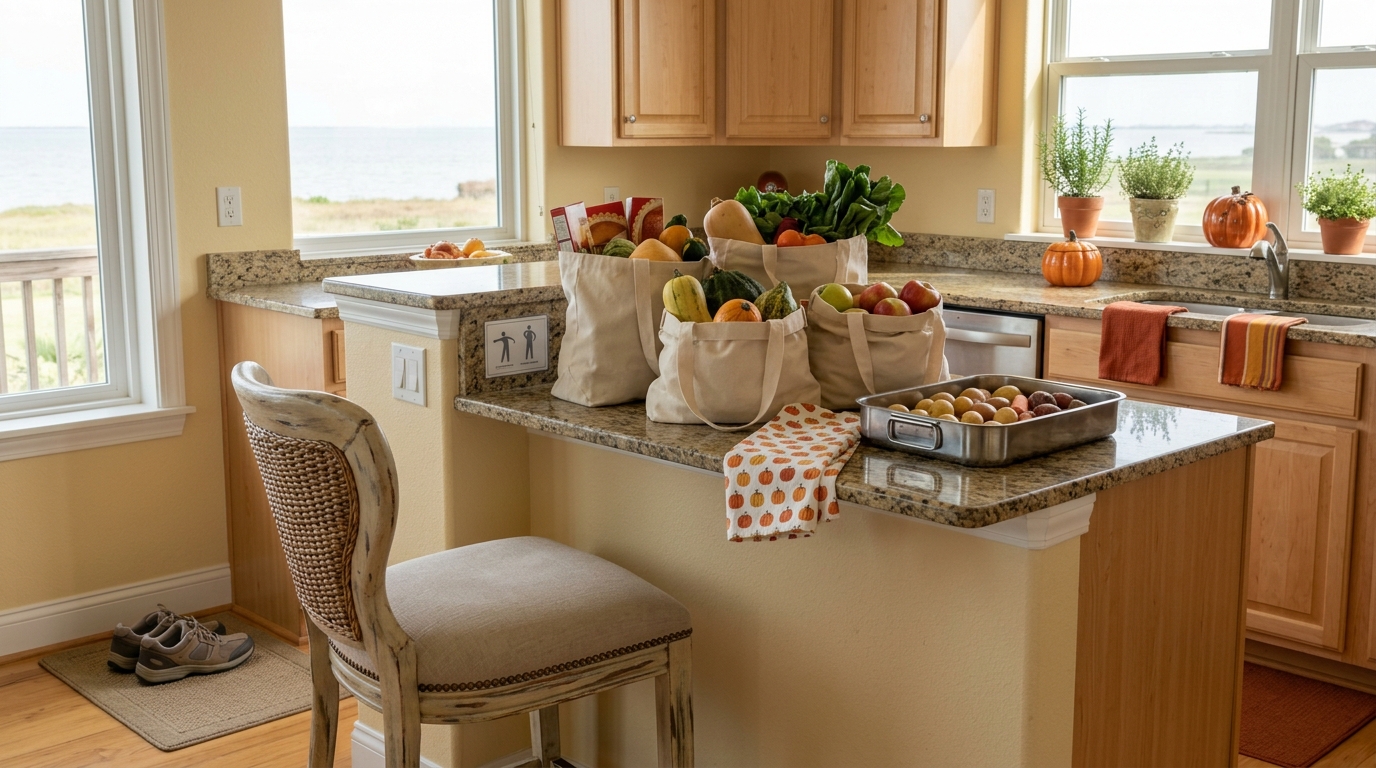
Thanksgiving Kitchen and Hosting Tips to Reduce Back and Neck Strain
Thanksgiving hosting can involve hours of cooking, carrying, cleaning, and welcoming family and friends. A little planning can help Galveston residents reduce unnecessary back and neck strain while still enjoying the day. The goal is not perfection—it is pacing yourself, using good body mechanics, and getting help when a task is too much to manage alone.
Plan the Day Around Pacing
Many holiday aches begin when several demanding tasks are squeezed into a short window. Rather than tackling groceries, meal prep, furniture moving, and cleaning all at once, spread what you can across a few days. Make a short priority list, choose the tasks that truly need to be done, and allow yourself extra time.
On Thanksgiving Day, alternate activities whenever possible. If you have been standing at the counter for a while, sit down to review a recipe or set the table. If you have been cleaning, take a few minutes to walk around, gently change positions, and drink water before returning to the next task. Consistent pacing can be more comfortable than pushing through until your body demands a longer break.
Set Up a Back-Friendly Cooking Station
Counter height matters. Prepare food on a surface that lets you work without repeatedly hunching your shoulders or bending your neck toward the cutting board. If the counter feels low, use a stable, raised work surface when appropriate. Keep frequently used ingredients, utensils, and cookware within easy reach so you are not constantly twisting, bending, or reaching overhead.
When chopping, mixing, or washing dishes, stand close to the counter rather than leaning forward. Keep your shoulders relaxed and your elbows near your body. If you will be on your feet for a long stretch, place one foot on a low, stable step or open cabinet base for short intervals, then switch sides. Small position changes may help reduce the sense of strain that can build in the low back and neck.
Lift Groceries and Cookware With Your Hips
Thanksgiving groceries can add up quickly, especially when bags contain canned goods, beverages, serving dishes, or a frozen turkey. Before lifting, get close to the item and check its weight. Keep your feet about shoulder-width apart, bend at your hips and knees, and maintain a comfortable, neutral back position. Use your legs to rise while holding the load close to your body.
Avoid bending forward at the waist, lifting while twisting, or trying to carry a bulky item one-handed. Instead, turn with your feet and take small steps. For roasting pans, coolers, and large grocery bags, split the contents into lighter loads whenever possible. Two manageable trips are often easier on the body than one overloaded trip.
Move Chairs and Tables in Smaller Steps
Rearranging a dining room or patio can be more physically demanding than it looks. Slide furniture when the surface and furniture design allow, rather than lifting it outright. For chairs, lift close to your body and avoid reaching across a table to grab them. If a table is heavy, awkward, or needs to go up or down stairs, make it a two-person job.
Asking for help is not a sign that you are giving up control of the hosting duties. It is a practical way to protect your energy and avoid unnecessary strain. Give guests simple, specific jobs: carry in grocery bags, move a few chairs, set up beverages, load the dishwasher, or take out trash. Most people are happy to contribute when they know what would be useful.
Choose Supportive Footwear for Hosting Tasks
Slippers, socks, or unsupportive sandals may feel convenient indoors, but they may not be ideal for long periods of standing, lifting, or moving around the kitchen. Choose comfortable, supportive shoes with stable soles while you cook, clean, and carry items. This can help you feel more steady while moving through a busy home.
Save the dressier shoes for the meal or gathering if you prefer, then return to supportive footwear for cleanup. Your feet, legs, and back work together throughout the day, so a stable foundation can make everyday hosting movements feel more manageable.
Build Brief Movement Breaks Into the Schedule
You do not need a full workout between basting the turkey and greeting guests. A brief movement break can be as simple as walking to another room, rolling your shoulders gently, relaxing your jaw, or changing from sitting to standing. If you have been looking down at a phone, recipe, or countertop task, lift your gaze and allow your neck to return to a comfortable position.
Try setting a reminder to take a short break every 30 to 45 minutes during longer prep sessions. These pauses are also a good time to reassess: Is there a task that can wait? Can someone else take over? Is it time to split a load or use a cart? Listening to those signals early supports a more enjoyable holiday.
Know When General Advice Is Not Enough
These holiday strategies are general wellness tips, not a substitute for a professional evaluation. Seek appropriate medical attention if pain is severe, persistent, follows a fall, collision, or other trauma, or occurs with neurological symptoms such as numbness, tingling, weakness, changes in balance, or pain that travels into an arm or leg.
For people already managing recurring discomfort, a busy holiday can reveal how much daily habits affect the spine and surrounding muscles. At Disc Center of America, our Galveston chiropractic team provides personalized, drug-free and non-surgical approaches for musculoskeletal pain. Depending on your needs, care may include chiropractic services and advanced options such as spinal decompression therapy for qualifying patients with disc-related concerns, as well as care for certain nerve-related and musculoskeletal conditions.
A Comfortable Holiday Starts With a Practical Plan
Thanksgiving does not have to mean doing every task yourself or pushing through discomfort to create a welcoming meal. Pace your preparation, organize your workspace at a comfortable counter height, lift with your hips, divide heavy loads, wear supportive shoes, and take brief movement breaks. Most importantly, invite family and friends to share the work—and the celebration.
If back or neck discomfort has been making everyday activities harder, Disc Center of America is here to help Galveston residents explore thoughtful, non-invasive options for care. Consider scheduling a pre-holiday visit to discuss a plan before the busy day, or a post-holiday appointment if you would like support getting back to comfortable movement.
FAQ
How can I reduce back strain while cooking Thanksgiving dinner?
Work close to the counter, keep commonly used items within reach, avoid prolonged leaning, and alternate standing tasks with short position changes. Planning prep work over more than one day can also reduce the urge to rush.
What is the safest way to lift heavy grocery bags?
Get close to the bag, bend through your hips and knees, keep the load near your body, and rise using your legs. Avoid twisting while carrying. When bags are heavy or awkward, divide them into smaller loads or ask someone to help.
Should I wear supportive shoes while hosting at home?
Supportive, stable footwear can be a practical choice for extended cooking, cleaning, lifting, and moving around the house. It may help you feel steadier than socks, slippers, or unsupportive shoes during active hosting tasks.
When should I seek care for back or neck pain?
General self-care strategies are not a replacement for evaluation when pain is severe, persistent, or follows trauma. Prompt attention is also important when symptoms include numbness, tingling, weakness, balance changes, or pain that travels into an arm or leg.
Can Disc Center of America help with ongoing back or neck discomfort?
Disc Center of America offers personalized chiropractic care in Galveston, including drug-free and non-surgical approaches for musculoskeletal concerns. A professional evaluation can help determine whether our services, including spinal decompression therapy for appropriate patients, may be a suitable part of your care plan.