
Spinal Decompression and Traditional Traction: What Patients Should Know
Spinal decompression and traction are terms patients may hear when seeking help for disc-related back or neck pain. While they can sound interchangeable, different systems and treatment approaches may work in different ways. The most helpful next step is not to assume one option is right for everyone, but to ask clear questions about how it works, why it is being recommended, and whether it fits your diagnosis, symptoms, and health history.
At Disc Center of America, our focus is individualized, non-surgical care for people experiencing disc-related back pain, neck pain, radiating symptoms, and certain nerve-related concerns. We take time to understand the person behind the symptoms and to determine whether a conservative, non-invasive spine treatment approach may be appropriate—or whether another medical evaluation is needed.
Why the Terms Can Be Confusing
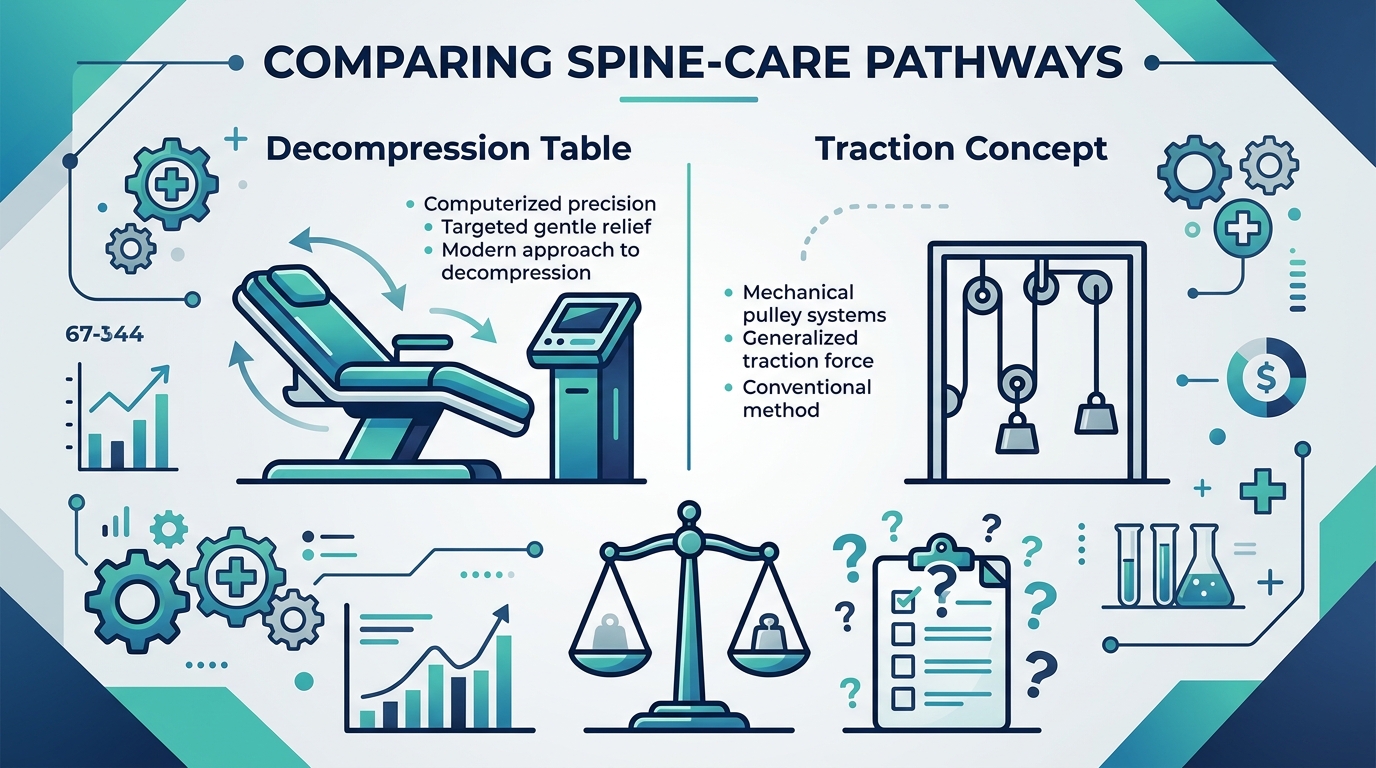
“Traction” generally describes a process that applies a pulling force to the spine. It may be delivered manually or with equipment, and the goal is often to gently position or unload an area of the neck or low back.
“Spinal decompression” is frequently used to describe a more specific, computer-guided form of traction that uses changing levels of pull and relaxation. Some systems are designed to create a controlled treatment cycle rather than applying one steady force. However, the name alone does not tell you exactly what equipment will be used, how the settings are chosen, or whether it is suitable for your condition.
That is why patients searching for spinal decompression therapy in Galveston, TX should look beyond the label. A meaningful consultation should explain the proposed system, the intended goals of care, and the reasons it may—or may not—be a reasonable option for you.
Care Should Start With Your Diagnosis
Back and neck symptoms can have many causes. A disc bulge, herniation, degenerative changes, joint irritation, muscle strain, spinal stenosis, or an injury after an auto accident may create similar symptoms while requiring different clinical considerations. Leg pain, sciatica, numbness, tingling, or weakness can also point to the need for a careful assessment rather than a one-size-fits-all plan.
At our Galveston disc center, we begin by reviewing your symptoms, health history, examination findings, and available records. This helps us consider whether conservative chiropractic care, decompression-based care, or another non-surgical back pain treatment approach is appropriate. It also helps identify situations that warrant prompt referral or additional medical testing.
Disc Center of America does not present decompression as a universal answer or a replacement for necessary surgery. Some patients may be candidates for non-surgical care; others may need co-management with another provider, further diagnostic evaluation, or surgical consultation. The right recommendation depends on the individual clinical picture.
Questions to Ask About a Recommended System
You deserve to understand any treatment being proposed. During a consultation, consider asking:
- What is my working diagnosis, and what findings support it?
- Is this traction, computer-guided spinal decompression, or another type of treatment?
- How does this particular system work?
- What is the goal of treatment in my case: reducing irritation, improving mobility, supporting function, or something else?
- Why do you believe this approach may fit my symptoms and health history?
- Are there risks, precautions, or reasons I may not be a candidate?
- What other treatment options should I consider?
- How will we measure whether I am improving?
- When should I contact my medical provider or seek a surgical opinion?
A provider should welcome these questions. Clear answers can help you make an informed decision and understand what realistic progress may look like.
What to Bring to Your Consultation
Helpful information often makes the initial visit more productive. If you have them, bring prior X-rays, MRI or CT reports and images, medical records related to your condition, a medication list, and notes from previous providers. It can also help to write down when your symptoms began, what makes them worse or better, and whether pain travels into an arm or leg.
Patients seeking herniated disc treatment in Galveston, TX or care for a suspected pinched nerve should also mention any history of falls, fractures, osteoporosis, cancer, vascular conditions, implanted devices, prior spine surgery, or major medical diagnoses. Share whether you have noticed new weakness, changes in balance, bowel or bladder changes, fever, unexplained weight loss, or other concerning symptoms. Those details matter because they may change which treatments are appropriate and how urgently further care is needed.
Individualized Care Means Ongoing Reassessment
An initial recommendation should not become an automatic, unchanging plan. At Disc Center of America, we believe conservative care should include reassessment. That may involve checking changes in pain, mobility, daily activity tolerance, neurological symptoms, and functional goals over time.
If you are improving, your care plan may be adjusted to support continued progress. If you are not responding as expected, or if symptoms worsen, the next step may be to modify the approach, request additional imaging or medical input, or refer you to the appropriate specialist. Reassessment keeps treatment focused on your response—not simply on a preset schedule.
Setting Realistic Expectations for Disc-Related Pain
People looking for chronic back pain relief in Galveston often want a quick, definitive solution. It is understandable to want relief, especially when pain has affected work, sleep, travel, or time with family. Still, disc-related pain and neck pain can be complex, and outcomes vary.
A thoughtful non-invasive spine treatment plan may include a combination of services based on your needs, such as chiropractic care, decompression-based therapy when appropriate, activity guidance, and referral when another level of care is indicated. The goal is to help you make informed choices and pursue care that fits your condition—not to make promises that no responsible provider can guarantee.
When Surgery May Still Be Necessary
Non-surgical care can be a reasonable first step for many people, but it is not always the right path. Certain findings, progressive neurological deficits, severe structural concerns, or symptoms that do not respond to appropriate conservative care may require a surgical evaluation. Choosing to seek that evaluation is not a failure of conservative treatment; it is part of responsible, patient-centered decision-making.
Our role at Disc Center of America is to help patients understand their options and identify a sensible next step. For some, that may include spinal decompression therapy in Galveston, TX. For others, it may mean a different conservative strategy or coordination with another healthcare professional.
FAQ
Is spinal decompression the same as traction?
Not always. Traction is a broad term for applying a pulling force to the spine. Spinal decompression may refer to a specific type of equipment or treatment protocol that uses controlled cycles of pull and relaxation. Ask your provider to explain the system being recommended and how it differs from other options.
Can decompression help every bulging or herniated disc?
No. Whether it may be appropriate depends on your diagnosis, symptoms, imaging, medical history, and examination findings. No treatment is proven to work for every patient or every disc condition.
Should I bring my MRI to a consultation?
Yes, if it is available. Bring the report and, when possible, the images themselves. Prior X-rays, CT scans, medical notes, and a medication list can also help your provider make a more informed recommendation.
How will I know whether my treatment plan is working?
Your provider should establish measurable goals, such as changes in pain, mobility, sleep, tolerance for daily tasks, or radiating symptoms. Regular reassessment helps determine whether the plan should continue, change, or prompt referral.
When should I seek urgent medical attention for back or neck symptoms?
Seek prompt medical attention for symptoms such as new or worsening weakness, loss of bowel or bladder control, numbness in the groin area, severe trauma, fever with significant back pain, or other rapidly changing neurological symptoms. These concerns require medical evaluation rather than waiting for routine conservative care.
If you are considering non-surgical care for disc-related back or neck pain, schedule a consultation with Disc Center of America in Galveston. We can review your history, discuss your options, and help you decide whether a personalized conservative care plan is an appropriate next step.