
Holiday Travel Stretches and Posture Tips for the Road
Holiday travel can be a highlight of the season, but long hours in a vehicle or airplane seat may leave your body feeling sore before you reach your destination. Whether you are driving to see loved ones or flying for a getaway, staying in the same position for too long can place added strain on your neck, back, hips, and shoulders.
Fortunately, staying more comfortable does not require a complicated workout routine. A few easy stretches, brief movement breaks, and simple posture adjustments can help reduce travel-related stiffness. Taking a minute or two to move each hour can help you arrive feeling more relaxed and ready to enjoy your time away.
Why Travel Can Cause Stiffness and Discomfort
When you sit for an extended period, your body is not moving through its usual range of motion. Your hips stay bent, while your upper body may gradually round forward. This combination can contribute to tight hip flexors, lower back discomfort, chest tension, and sore shoulders.
The effects of sitting may not be obvious until you stand up after several hours. It is common to notice stiffness in the neck, hips, or back after a long drive or flight because the muscles have remained relatively inactive. Regular movement can help reduce that tightness before it becomes more noticeable.
For people who already experience chronic back pain, neck discomfort, or disc-related symptoms, travel may be especially challenging. Paying attention to movement and posture can be a helpful part of protecting your comfort while you are away from your normal routine.
Stretching During Long Road Trips
Hours behind the wheel can leave muscles feeling tight and joints less mobile. Planning regular stops is one of the easiest ways to give your body a break and reduce the strain that can build during a long drive.
At a fuel stop or rest break, take a moment to stretch your hips. A runner’s lunge can help open the hip flexors after prolonged sitting. Even a short stretch may help you regain some mobility before returning to the driver’s seat.
You can also use a stable wall or surface near your vehicle to open the front of your upper body. Place your hands against the surface, reach upward, and gently shift your chest forward. This movement can help relieve tension across the chest and shoulders that often develops from leaning toward the steering wheel.
Another useful chest stretch can be done beside a doorway or wall. Bend your elbows to about 90 degrees, rest your forearms against the surface, and lean forward slowly until you feel a gentle opening through the chest. This helps counter the rounded shoulder position that can develop during a lengthy drive.
When it is safe to do so, use occasional posture resets while driving. Gently drawing your shoulder blades together can help you avoid slumping forward and support better alignment throughout the trip.
Simple Ways to Stay Comfortable on a Flight
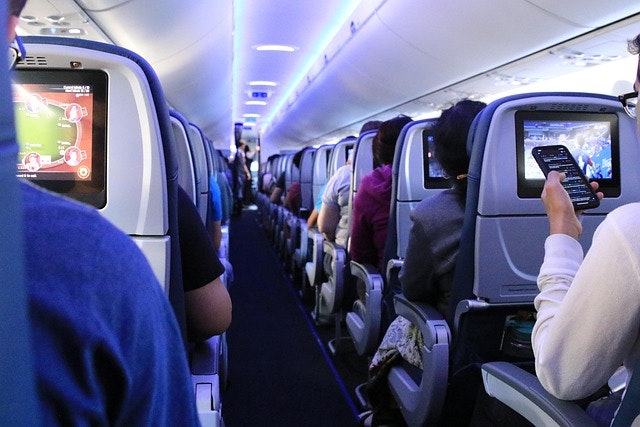
Flying creates many of the same issues as driving, often with fewer chances to change positions. Sitting in a limited space for several hours can leave joints feeling stiff and may slow circulation in the lower body.
A brief movement routine about once an hour can make a meaningful difference. Slowly roll your neck in each direction and circle your shoulders forward and backward to ease the upper-body tension that can accumulate during a flight.
Your hips also benefit from gentle movement. Pull one knee toward your chest at a time to create a light stretch through the hip area. This can help loosen muscles that tend to tighten when you remain seated for a long time.
Do not forget about your feet and ankles. Ankle circles and gentle foot pumps can encourage circulation and help keep your lower legs from feeling as stiff when you land. These movements take very little room and can be done right in your seat.
Posture Matters While You Travel
Stretching is important, but posture also plays a major role in travel comfort. Maintaining better positioning can reduce unnecessary stress on the neck, shoulders, and upper back during both road trips and air travel.
One common habit is allowing the head to move forward while driving, reading, or looking at a phone. As the head shifts farther ahead of the shoulders, the neck muscles have to work harder to support it. Over time, this may contribute to tension in the neck, shoulders, and upper back.
Try to keep your ears positioned over your shoulders as often as possible. This small adjustment supports better spinal alignment and can lessen strain during long periods of sitting.
A gentle chin tuck can also serve as a quick posture reset. Draw your chin back slightly, hold for a few seconds, then relax. Repeating this movement occasionally during travel may help keep neck tension from building.
Brief Movement Breaks Can Go a Long Way
Travel stretches do not require equipment, special clothing, or a large amount of time. Most can be completed in a minute or two, which makes them easy to incorporate into a drive, an airport wait, or a long flight.
Whether you are stopping at a rest area, walking through the terminal, or seated during a flight, small movement breaks can help your muscles remain active instead of becoming progressively tighter. Moving consistently during the day is often more effective than waiting until the trip is over to address discomfort.
Making mobility part of your travel routine can help you arrive feeling more comfortable, more mobile, and better prepared to enjoy time with family and friends.
When Travel Pain Needs Professional Attention
In many cases, travel-related stiffness improves within a day or two after you return to your usual activities. Gentle stretching, regular movement, and improved posture can often help the body recover after a long journey.
However, discomfort that continues after your trip, restricts your movement, or does not improve may require more than temporary stretching. Persistent back pain, neck pain, nerve discomfort, or symptoms related to a disc injury deserve professional attention.
At Disc Center of America, our Galveston chiropractic team helps patients explore non-surgical options for back and neck pain, disc-related discomfort, and chronic musculoskeletal concerns. For those seeking a Galveston spine specialist, we provide personalized care that may include spinal decompression therapy and other non-invasive approaches designed to support mobility and comfort.
If travel leaves you with lingering stiffness or pain, Disc Center of America can help you determine the next steps. Our Galveston, Texas, practice offers individualized guidance for patients seeking drug-free back pain treatment, lower back pain relief, and support for neck pain or nerve-related symptoms.